When Nvidia announced its $12.9 billion acquisition of Hugging Face, Wall Street immediately started raising eyebrows. An 86x revenue multiple. In traditional software terms, that price tag looks astronomical. But Nvidia isn't playing a traditional software game. While CEO Jensen Huang framed the deal as a push to scale open source infrastructure and broaden access to open weight models, market consensus quickly labeled it as ecosystem defense. It’s more than that.
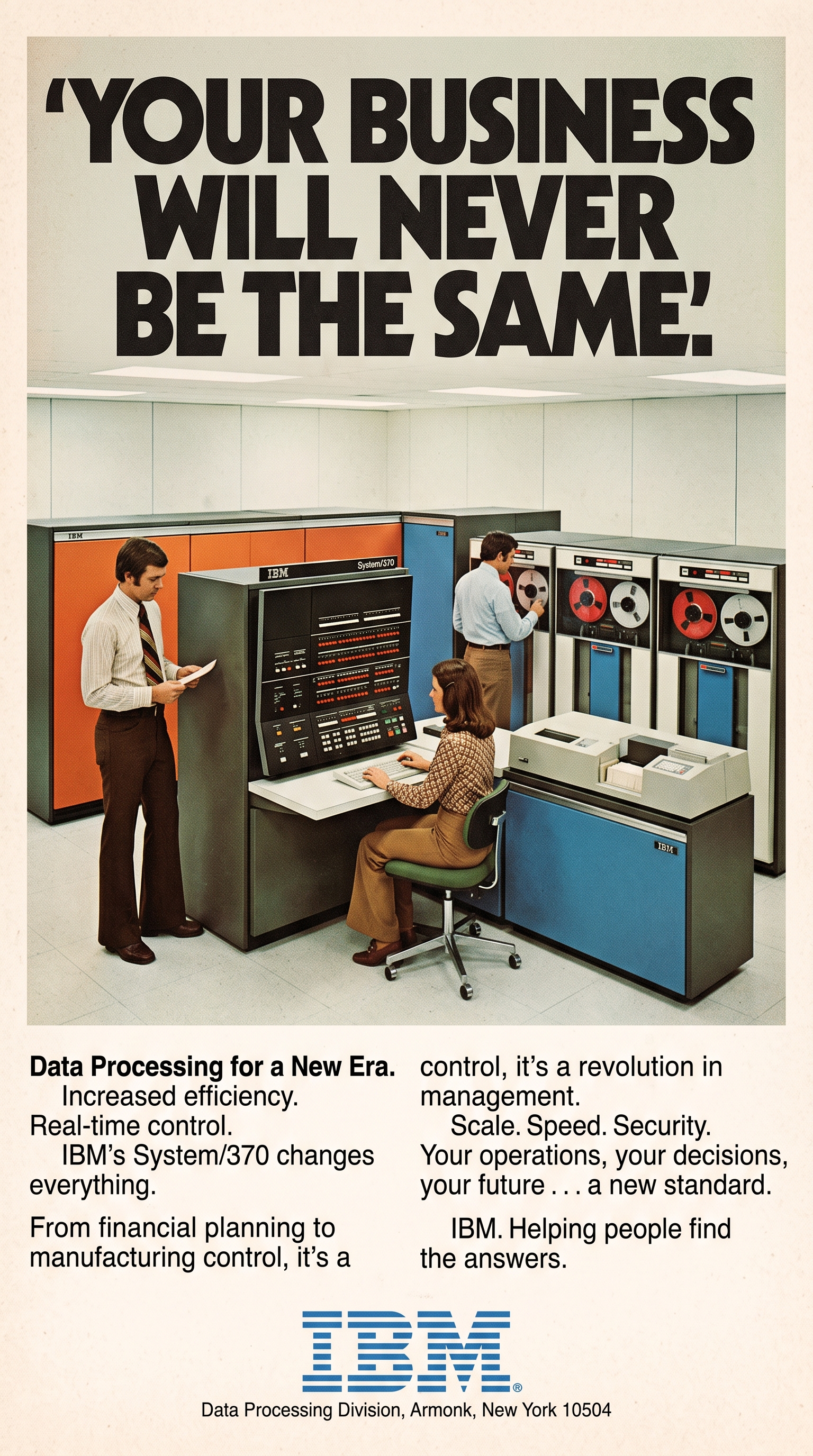
To understand what Nvidia is buying, look back to the 1970s. Enterprise computing was a cold, expensive world of mainframes: centralized monoliths owned by a chosen few. Corporate IT departments rationed compute time through green screen terminals, simply because mainframes were all anyone could afford.
Then came the microcomputer explosion. Apple, Commodore, and IBM pushed PCs onto desks everywhere. By mainframe standards, these early machines were weak, but they were local, private, cheap, and tailor made for specific daily tasks.
History is rhyming again.
Today's AI boom sounds a lot like that old mainframe gospel: multi trillion parameter monsters like ChatGPT 6, Gemini, and Claude running inside massive cloud data centers. But while cloud giants spend billions chasing raw horsepower, enterprise tech leaders are facing a different reality. The real corporate future belongs to the PC equivalent: small, hyper efficient, domain specific models running on private hardware.
A hospital processing medical records, a bank tracking fraud, or a law firm evaluating an M&A deal cannot dump private data into a public API. Critical domain work demands complete isolation, what the industry calls Sovereign AI, running on local servers that never touch the public internet.
The economics are just as compelling. Querying a massive 1.5 trillion parameter model just to categorize shipping invoices is financial nonsense. A targeted 8 billion parameter model fine tuned on company data costs a fraction of the price, runs at lightning speed, and knows the internal terminology inside out.
If these specialized models are the personal computers of the new AI era, Hugging Face isn't just a repository. It's the engine room. Take a look at where a lot of open source builders are going. Jev, Qwen, Mixtral, Mamba are all running real time experiments in packing more power into smaller models. The innovation pace is nothing short of frantic. If you think about it, this is the kind of market where nVIDIA shines the brightest.
For Nvidia, this is about survival. Its worst outcome is an AI industry whose workloads become predictable enough for custom silicon to take over. ASICs thrive when the job stays the same. Nvidia’s advantage is flexibility as the job keeps changing. Hugging Face puts it close to the developers pushing that change, giving Nvidia a chance to keep its hardware and software aligned with whatever comes next.
Small Models. Big Stakes at the Edge.
The next battle is at the edge: Nvidia versus Apple's M5. As smaller models become capable enough to handle serious work directly on personal hardware, the competition shifts toward who can run them efficiently, privately, and affordably. Apple's M5 and MLX framework put that challenge directly in Nvidia's path. Hugging Face gives Nvidia a foothold in the developer ecosystem shaping those models. The question is whether it can turn that position into an advantage where the models actually run.
The idea that AI will remain a winner take all game for a handful of cloud giants is quickly fading. We are moving out of the era of centralized AI mainframes and into an age of sharp, distributed personal models, and Nvidia just bought the keys to the entire ecosystem.